Storm & Lake Flooding Cleanup in Lutz, FL
Lake levels and the water table rise through the rainy season, and a tropical system can push runoff into low lots near the lakes. The mitigation team removes the water, cuts out what flood water touched and dries the rest.
(888) 621-2041Flood water inside the house? Call now.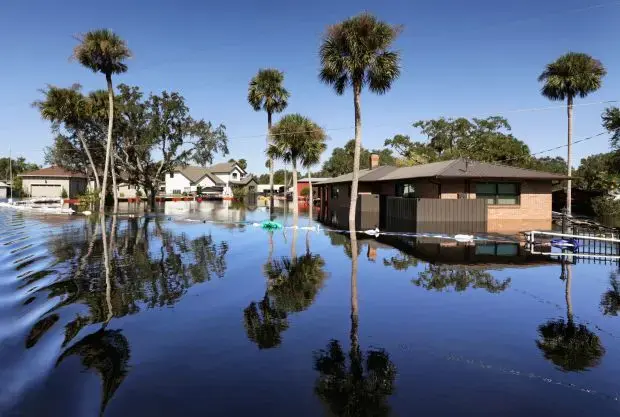
First steps for storm and lake flooding cleanup in Lutz
Stay out until power is off
Flood water and live outlets do not mix.
Avoid contact
Flood water carries sewage, soil and chemicals.
Photograph the water line
On walls, cabinets and doors.
Call before tearing out
So the loss is documented first.
How the Lutz team handles storm and lake flooding cleanup
Moisture mapped first
The tech who does the walkthrough reads walls, slab and cabinets with pinless meters and thermal imaging before any fan goes down.
IICRC S500 drying standard
The drying team works to IICRC S500, the industry drying standard: structural drying, not just surface drying.
Claim-ready documentation
Daily readings, drying logs and timestamped photos build the file an adjuster reviews.
Lutz water experts
Slab leaks on karst ground, pool home lanais, summer roof leaks and septic backups are routine work north of Tampa.
What does storm and lake flooding cleanup cost in Lutz, FL?
In Lutz, FL, storm and flood water cleanup typically runs $4,000 to $22,000 or more. The drivers are how high the water rose, how many rooms it reached, how long it sat, and how much drywall, flooring and cabinetry must come out.
A few inches, one area
$4,000 to $8,000
- Extraction and silt removal
- Flood cut drywall
- Antimicrobial treatment
Several rooms
$8,000 to $14,000
- Flooring and pad removed
- Cabinet bases opened
- HEPA air scrubbers
Whole ground floor
$14,000 to $22,000+
- Full flood cut
- Desiccant drying of block
- Claim documentation
For a closer planning figure, run the Lutz water damage cost calculator. A firm number comes from the on-site walkthrough.
The storm and lake flooding cleanup process in Lutz, start to dry
Four stops, in the same order on every job.
- 1
Walk and map
The tech who does the walkthrough traces where the water went, room by room, and marks the wet edge.
- 2
Extract
The extraction crew pulls standing water first, usually with truck-mounted units.
- 3
Dry to the load
Air movers and LGR dehumidifiers run at the load each room needs, with readings every day.
- 4
Verify dry
Equipment comes out when readings sit within 2 to 4 points of a dry reference material.
Lutz is lake country, and the lakes are part of the water table. Through June to September the ground fills up, lake levels climb, and a stalled tropical system can drop more rain than the ground and the drainage can take. Low lots near Crenshaw Lake, the Lake Fern area and the parkland around Lake Park see runoff move across yards toward the slab. Hurricanes Irma in 2017 and Milton in 2024 both brought heavy rain, wind and long power outages to northern Hillsborough and Pasco counties.
Why flood water is handled as Category 3
Water that rises from outside has crossed lawns, streets and septic drain fields, so it carries bacteria, soil and chemicals. Porous materials touched by Category 3 water get removed, not dried: carpet and pad, the lower drywall, wet insulation, and often the bottom of cabinets. The mitigation team cuts drywall above the highest wicking line and works in protective gear with HEPA air scrubbers running.
How a flood cleanup runs
- The extraction crew pumps and extracts the standing water and silt.
- The tech who does the walkthrough maps the wet line on every wall.
- Flooring, pad and drywall below the cut line come out and get bagged.
- Hard surfaces are cleaned and treated with an EPA-registered antimicrobial.
- Air movers, LGR and desiccant dehumidifiers dry the framing and the block until readings reach the goal.
Flood insurance is separate
Rising water from outside is usually a flood claim under a separate flood policy, such as an NFIP policy, and not under standard homeowners coverage. Coverage depends on your policy, so it is worth checking with your own insurer. Photos of the water line before anything is removed matter for any claim. For rain that came through the roof or under a slider instead, see roof leak water damage or pool home and lanai water intrusion.
Flood coverage basics at FloodSmart.gov and recovery steps from FEMA.
Storm and lake flooding cleanup across Lutz and the lakes north of Tampa
The Lutz restoration crew covers Cheval, Lake Fern, Crenshaw Lake, old Lutz along US 41, Sunlake Boulevard and Heritage Harbor, plus Land O' Lakes, Odessa and Carrollwood, ZIP codes 33548, 33549, 33558 and 33559.
Every neighborhood and ZIP coveredRelated water damage services in Lutz
Storm and Lake Flooding Cleanup questions in Lutz, FL
Is flood water always Category 3?
Yes. Water that rises from outside has crossed soil, streets and septic fields, so it is treated as Category 3 from the start.
How high is drywall cut after a flood?
Above the highest wicking line, often 2 to 4 feet, so wet drywall and insulation behind it come out in one straight cut.
Can furniture and cabinets be saved?
Solid wood pieces can sometimes be cleaned and dried. Particleboard cabinets and upholstered furniture touched by flood water usually cannot.
Should I wait for the adjuster before cleanup?
Photograph everything first, then start mitigation. Waiting lets damage grow, and most policies expect reasonable steps to limit it.
Does homeowners insurance cover lake flooding?
Usually not. Rising water from outside falls under a separate flood policy. Coverage depends on your policy, so it is worth checking with your own insurer.
How long does a flood dry-out take?
After the removal work, framing and block typically dry in five to ten days, longer for dense block walls.
Flood water in a Lutz home? Start the cleanup now.
Category 3 water keeps wicking up drywall and block until the wet materials come out. The mitigation team works day and night across Lutz, Land O' Lakes, Odessa and Carrollwood.